Engineered capsids take time to build. Spyndle is for computationally deciding which ones are worth building.

The Design Studio for Gene Therapy

An insert is profiled on its backbone before a production run or a wet-lab cycle: geometry, thermal tolerance, and packaging.

Before you run it

Spyndle dashboard for capsid loop design
Dashboard

A workspace for structure-guided capsid decisions.

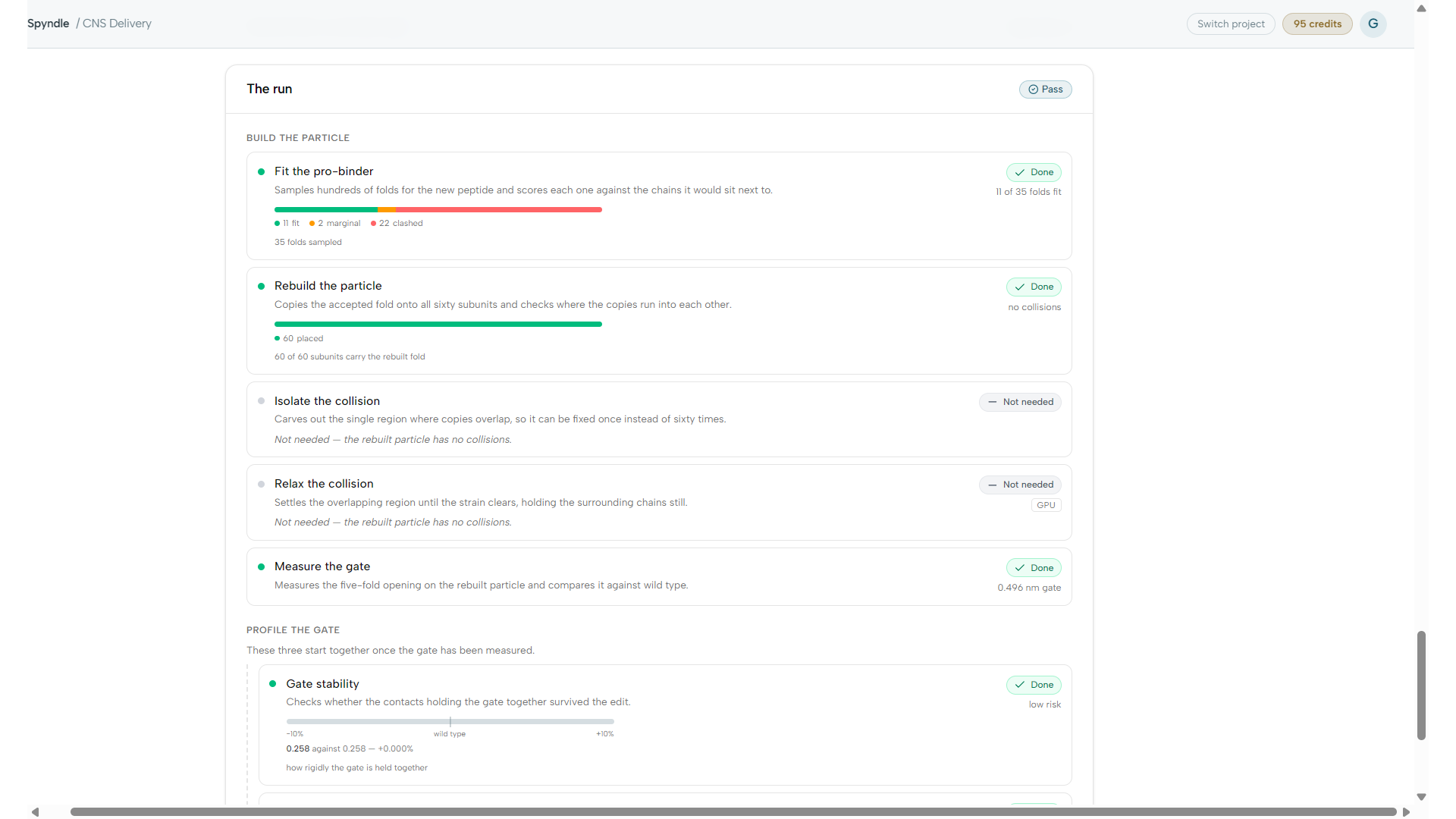
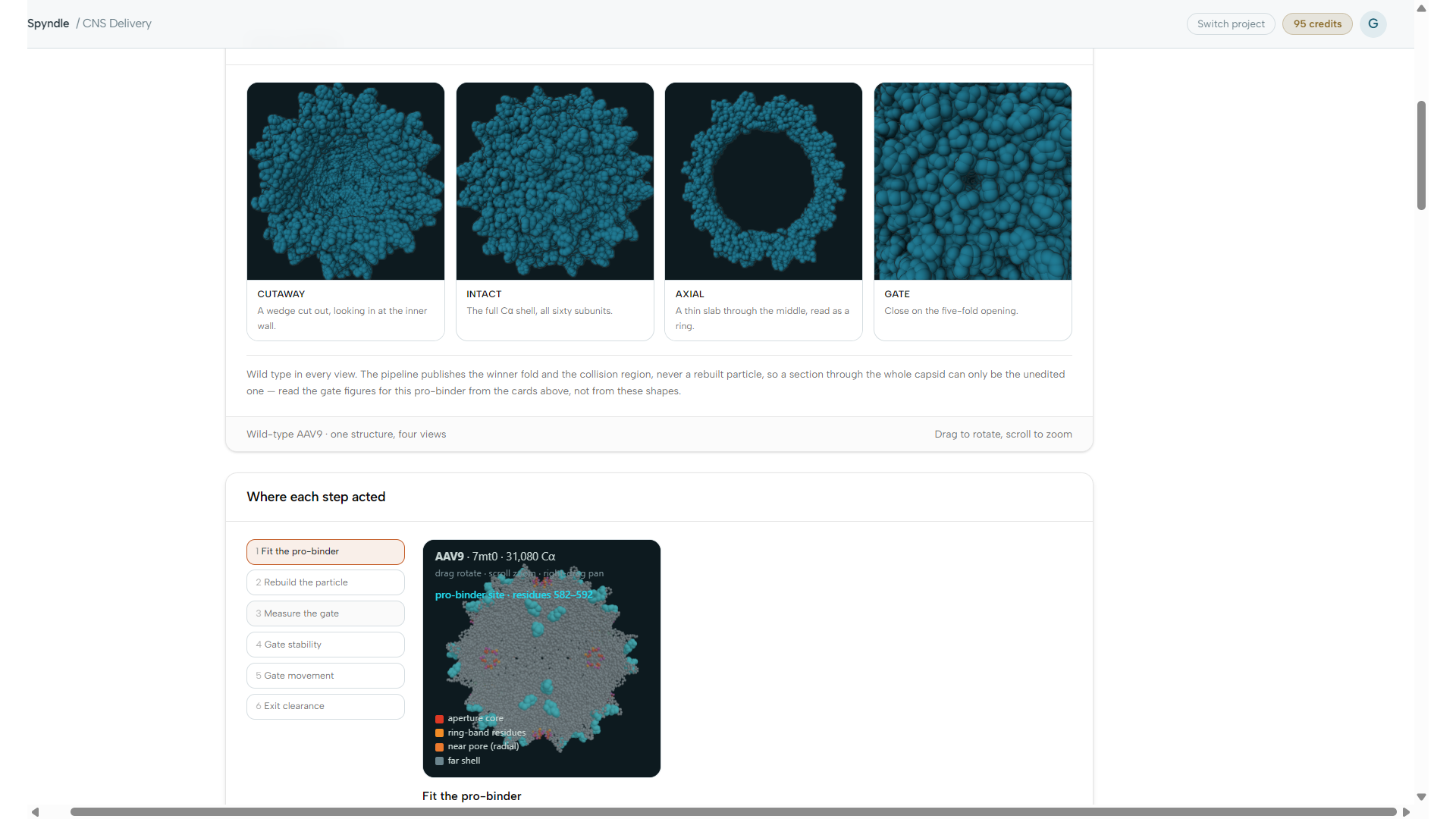
Spyndle run analysis for a capsid design
Run analysis

Geometry and dynamics you can inspect before you build.

Who it's for

Two decisions, one studio

The same profile serves yield and delivery, before material is committed.

Manufacturing & CDMO

  • Packaging risk, aggregation, and low yield before a failed lot
  • A failed lot is a late place to learn the insert
  • Serotype panels read on the same profile

Capsid & delivery R&D

  • Which inserts are worth a cross-serotype test
  • See why the others fail before a construct hits the bench
  • Commission a deeper run when the profile justifies it

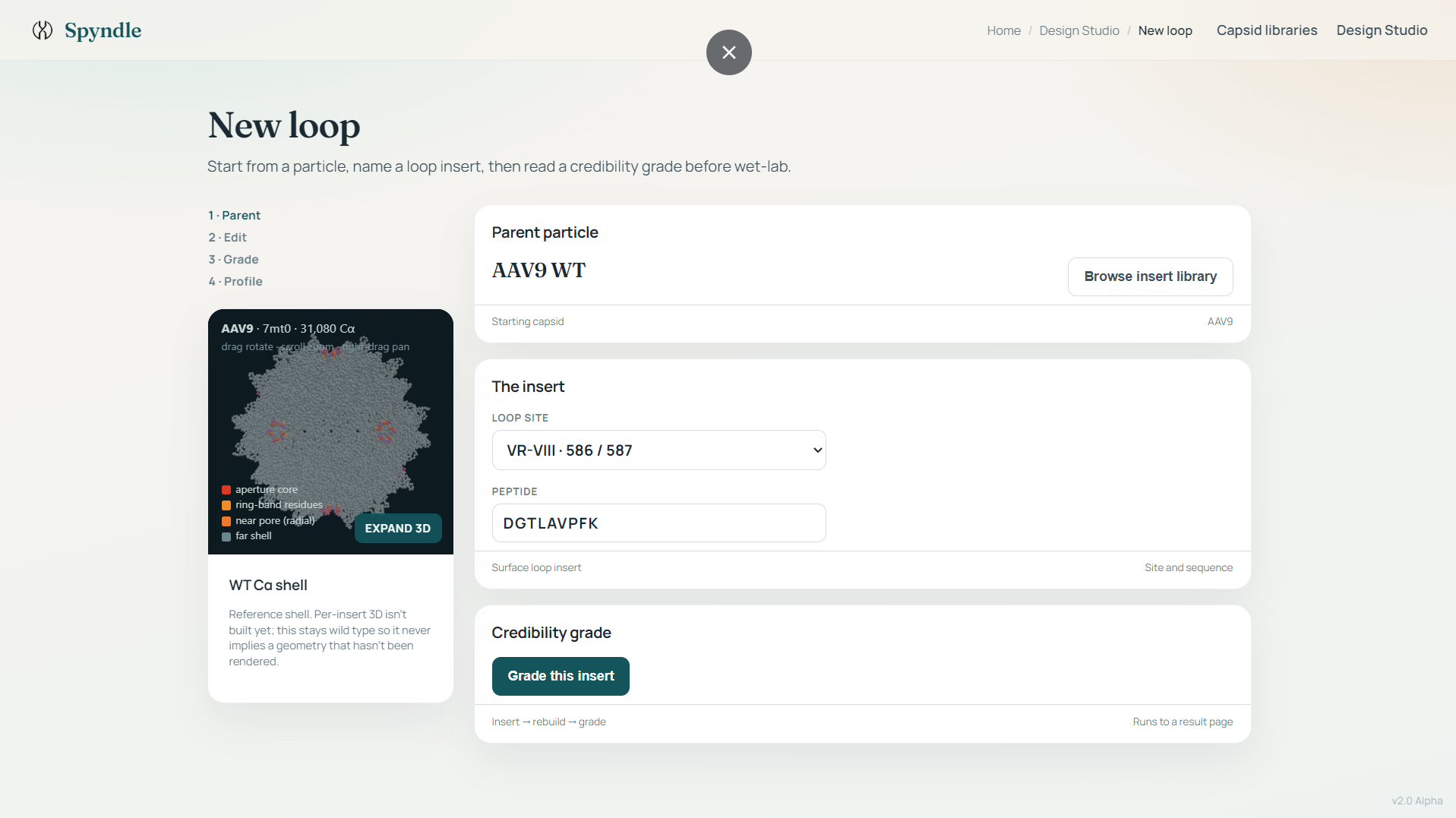
Place the peptide, read the insertion, then simulate it.

Three passes

i. Insert

The peptide is placed into the capsid, so the candidate is a structure you can inspect, not only a sequence on a list.

ii. Profile

That insertion is read across pH, topology stability, and the conformations the insert can take.

iii. Simulate

Physics simulations of the peptide show how the insert behaves once it is in place.

20,000+ AAV9 peptide inserts screened
57,000 Connections in the knowledge graph
13 Serotypes with paired biophysical profiles

The studio

Why Spyndle?

Spyndle is a design studio for gene therapy teams. Every score traces back to a mechanism, so you can see why a candidate fails before it is run.